
Firefighting & Safety Systems
- Home
- Firefighting & Safety Systems
Firefighting & Safety Systems
Firefighting & Safety Systems are designed to detect, control, and extinguish fires while protecting people, property, and equipment. These systems include fire alarms, sprinklers, extinguishers, hydrants, smoke detectors, and emergency response equipment. They help minimize fire-related risks, ensure compliance with safety regulations, and enhance workplace safety. Effective fire safety systems are essential in industrial, commercial, and residential environments.
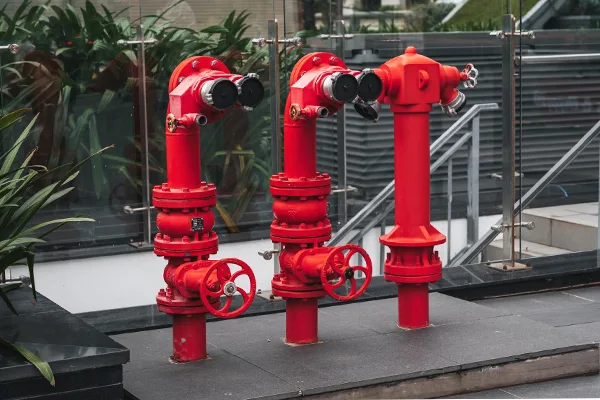
FIRE HYDRANT SYSTEM
A Fire Hydrant System, also known as a Hydrant Pump System or Booster Pump System, is one of the most reliable and widely used fire protection systems. It provides a continuous water supply for firefighting and is commonly installed in industrial, commercial, and residential facilities. Due to its effectiveness, it is recommended by fire safety authorities and regulatory bodies.
SPRINKLER SYSTEM
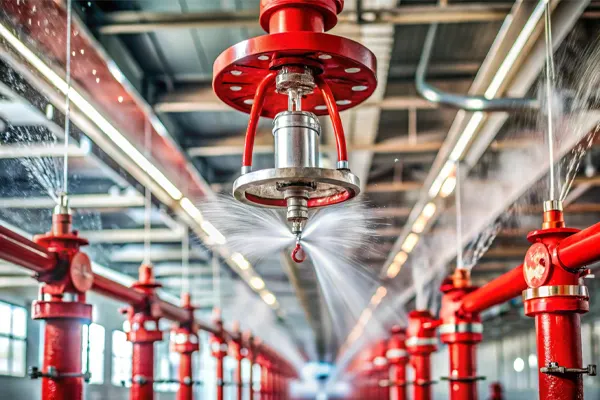
A Fire Sprinkler System is an efficient, user-friendly, and highly reliable fire protection solution with a proven success rate of over 97% in controlling fires. It is widely used in commercial buildings, warehouses, hospitals, and other facilities with high occupancy or valuable assets. Automatic sprinkler systems are preferred as they require minimal human intervention and operate quickly during emergencies.
MEDIUM VELOCITY WATER SPRAY SYSTEM
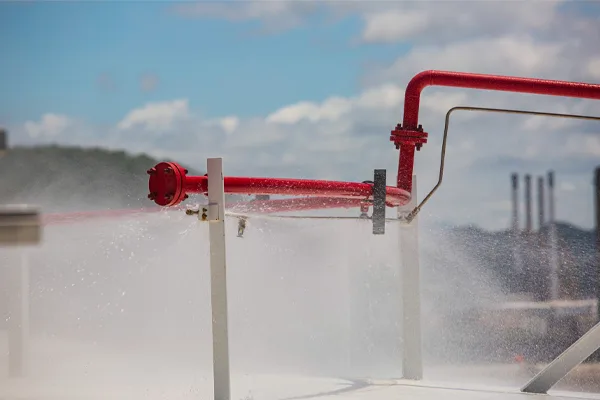
The Medium Velocity Water Spray (MVWS) System is designed in accordance with TAC regulations to provide effective fire protection for designated hazard areas. The system consists of a network of open spray nozzles equipped with specially designed deflectors that ensure the required spray angle and coverage. These nozzles discharge a cone-shaped spray of medium-sized water droplets, enabling efficient cooling and fire suppression.
HIGH VELOCITY WATER SPRAY SYSTEM
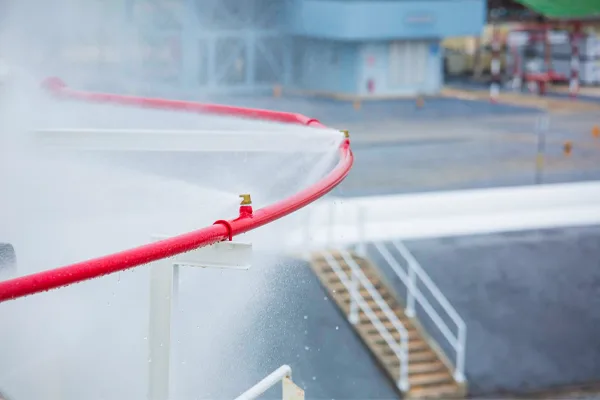
The Medium Velocity Water Spray System is highly effective for controlling fires involving heavy and medium oils. It uses specially designed nozzles to deliver the required spray pattern, coverage, and water flow based on the hazard area. The water spray penetrates the flame zone and reaches the burning oil surface, creating a non-combustible oil-water emulsion layer.
FOAM FIRE SUPPRESSION SYSTEM
Here’s a concise 3–4 line rewrite:
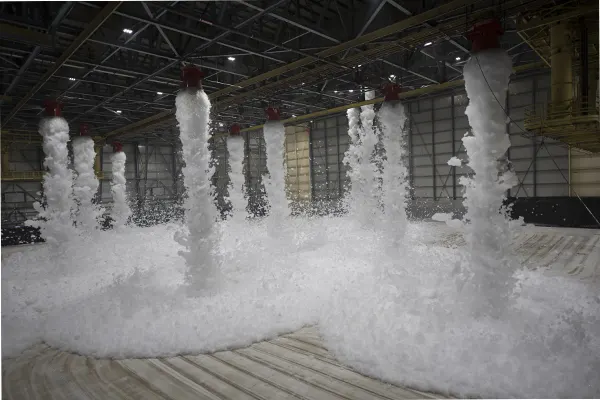
Firefighting foam is produced by mixing a foam concentrate with water at the required proportion and then aerating the solution, typically using air, to create a mass of gas-filled bubbles. The resulting foam forms a stable blanket over the fuel surface, helping to suppress and extinguish fires. A key characteristic of foam is its expansion ratio, which is the volume of generated foam compared to the volume of the foam solution used to produce it.
ADDRESSABLE FIRE ALARM SYSTEM
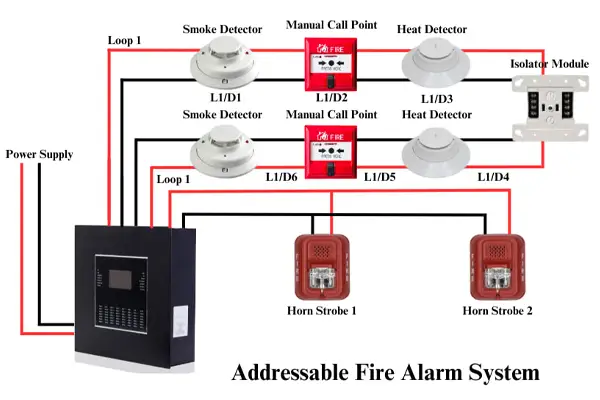
An Addressable Fire Alarm System is an intelligent fire detection system that accurately identifies the exact location of a fire within a building or large facility. Each device is individually addressed and monitored, allowing the control panel to pinpoint the source of an alarm or fault. This enables faster emergency response, reducing the risk to life and property. The system supports various detection methods, including smoke detectors, heat detectors, and manual call points.
CONVENTIONAL FIRE ALARM SYSTEM
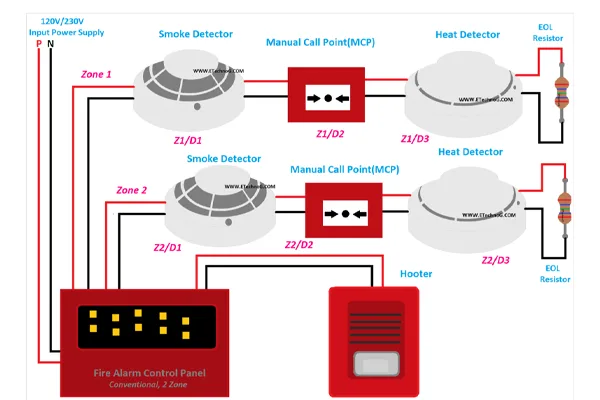
A Conventional Fire Alarm System is a basic fire detection system commonly used in small-scale industries, residential buildings, and commercial establishments. Unlike an addressable system, it identifies only the affected zone or floor rather than the exact device location. The system typically includes smoke detectors and manual call points for fire detection and alarm activation.
Ready to Power
Your Next Project?
Your Next Project?
Talk to our engineering team for a personalized consultation, on-site assessment, or detailed quotation.